Short-term bridging finance is often the starting point for commercial property investment. It allows investors to acquire assets quickly, fund refurbishment, or stabilise rental income before moving onto longer-term debt.
From Bridging to Commercial Mortgage: The Refinance Process
Commercial property refinancing is the point where that transition occurs. Borrowers replace expensive short-term funding with a commercial mortgage once the asset meets lender criteria.
As well as reducing costs, moving from bridging to commercial mortgage is about risk reduction, and timing. Lenders are assessing whether the property has moved from a higher-risk transitional phase into a stable income-producing investment.
Understanding when a property becomes refinance-ready and how lenders evaluate affordability is central to a successful bridging exit.
With commercial mortgage rates continuing to shift through 2026, getting the timing of your refinance right can make a real difference to your overall costs. Use our bridging loan calculator to compare refinancing now against waiting for a potentially better rate.
In this guide, we’ll cover:
- Refinancing a Commercial Property: When Does It Make Sense?
- Moving from Bridging Finance to a Commercial Mortgage
- How Lenders Assess Commercial Mortgage Affordability
- The Impact of Interest Rates on Refinance Viability
- Common Refinancing Risks to Consider
- Comparing Commercial Mortgage Options
Refinancing a Commercial Property: When Does It Make Sense?
Commercial property refinancing in the UK usually follows a clear lifecycle. An investor acquires an asset using bridging finance, improves the building, stabilises rental income, and then replaces the bridge with long-term debt.
Refinancing typically becomes viable when the property’s risk profile improves.
The Typical Refinance Lifecycle
Most projects move through four stages:
- Acquisition using bridging finance
Bridging lenders can fund assets that commercial mortgage providers will not initially support. These may include vacant buildings, properties requiring refurbishment, or assets with short and unstable leases.
- Asset stabilisation
The borrower improves the building so it meets long-term lending standards. This may involve refurbishment works, regulatory compliance, or lease restructuring.
- Income establishment
Commercial mortgage lenders rely heavily on predictable income. Securing tenants, or establishing a working premises for owner-occupied spaces, and demonstrating consistent rent collection can be key to refinancing.
- Refinance onto term debt
Once income stabilises and the building is operational, the borrower can refinance onto a commercial mortgage.
Common Triggers for Commercial Property Refinancing
Several milestones typically make a refinance possible, from stabilised income, completed improvements, or clearer valuation evidence:
Tenant secured
Vacant commercial property often doesn't qualify for a standard mortgage. Once a lease is in place, lenders can assess affordability based on contracted rent.
Most lenders prefer:
- Lease terms of 3–5 years or longer
- Tenants with trading history
- Evidence of rent payments
Refurbishment completed
Buildings undergoing heavy refurbishment or change of use rarely qualify for commercial mortgages.
Investors may also want to carry out light refurbishment, upgrade ESG measures, and make cosmetic improvements.
Once works are finished and the building is operational, lenders can produce a clearer valuation.
Read more about Refurbishment Finance.
Improved rental income
Higher rent can increase borrowing capacity. For example:
- A building generating £80,000 annual rent might support around £700,000–£750,000 of borrowing at a DSCR of 1.25 and interest rates near 6% (interest-only, with stress test rate of around 8.5%-9%).
- If income rises to £110,000, the same property could support closer to £950,000–£1 million of borrowing, depending on lender stress testing.
Planning certainty achieved
Assets with unresolved planning issues can be difficult to fund due to the element of uncertainty. Once permissions are secured, refinance options typically expand and commercial mortgage becomes a viable option.
Essentially, commercial property refinancing in the UK is about reducing risk, both for the borrower in terms of the cost and short-term nature of the debt, and how lenders view the asset.
Read more about how Land/ Planning Bridging Loans work.
Moving from Bridging Finance to a Commercial Mortgage
Bridging loans usually run for 1 to 24 months. At the outset, lenders expect a defined exit strategy, which is typically a sale or refinancing.
For long-term investors, refinancing is the natural progression once a property becomes income producing.
Income Determines Refinance Eligibility
Commercial mortgage lenders base affordability on rental income. As such, vacant assets can be harder to refinance, with less lender appetite and less competitive loans.
For the optimal commercial property refinance, lenders prefer:
- Stable rental income from at least one established tenant
- Acceptable tenant covenant strength
- Long leases (10+ years) with several years remaining if part-way through (short leases close to expiry reduce income visibility and can lead to more restrictive lending)
- Market-level rent, and sufficient to support loan repayments
- If a building contains several units, diversified income across multiple tenants is usually preferred
- Standard full repairing and insuring (FRI) leases
- Valuation supported by comparable evidence
- Loan-to-value ratios typically 60–75%
Timing the Refinance
Refinancing too early can create problems. If refurbishment works are incomplete or rental income is not yet being generated, valuations may not reflect the intended improvements.
This can create a refinance gap where the available mortgage is smaller than the outstanding bridge balance.
Waiting too long also increases costs. Bridging loans have higher charges than long-term finance, so having a bridging loan for longer than necessary can be inefficient. Most bridging loan lenders don’t charge exit fees (though there may be early redemption fees if exiting before an agreed term), which is worth bearing in mind if you’re ready to exit earlier than expected.
Evidence Lenders Expect
When refinancing from a bridging loan to a commercial mortgage, lenders typically require:
- Signed leases and rent schedules
- Tenant information where available
- 2-3 years of business accounts for owner-occupied commercial properties
- Completed valuation reports
- Borrower financial accounts
- Evidence refurbishment works are finished
Planning the refinance from acquisition helps align refurbishment, leasing strategy, and timelines with commercial lender requirements. Also, having a mortgage in principle can bolster the bridge application.
.png?width=680&height=200&name=Untitled%20design%20(20).png)
How Lenders Assess Commercial Mortgage Affordability
Affordability assessment is central to commercial property refinancing in the UK. Lenders focus primarily on whether the rental income comfortably supports loan repayments under stressed conditions.
A key metric is the Debt Service Coverage Ratio (DSCR).
Debt Service Coverage Ratio
DSCR measures the relationship between rental income and annual debt payments.
The calculation is:
DSCR = Net operating income (NOI) ÷ annual debt service payments (includes principal and interest)
A DSCR above 1.0 indicates sufficient income to cover debt payments; below 1.0 signals a potential shortfall. Most commercial lenders require a DSCR between 1.25 and 1.40 and loan agreements often require borrowers to maintain a minimum DSCR.
Stronger properties and borrowers attract lower DSCR thresholds, and DSCR requirements vary by property type. For example, in today’s market, prime office space will have lower requirements than a large retail space.
A DSCR of 1.25 means the property generates 25% more income than required to service the loan.
Example:
- Annual rent: £100,000
- Annual debt payments: £80,000
DSCR = 1.25
Higher DSCR requirements reduce borrowing capacity but provide lenders with greater protection.
Rental Income Assumptions
Lenders normally assess income conservatively. They may:
- Exclude temporary rental incentives
- Adjust income if rent appears above market level
- Consider tenant covenant strength
If a tenant is newly established or financially weak, lenders may reduce the income used in calculations.
Interest Rate Stress Testing
Affordability isn’t assessed using the current interest rate alone. Instead, lenders apply a stress rate, often between 6% and 8%.
For example:
- Actual mortgage rate: 5.8%
- Stress rate used in DSCR modelling: 7.5%
This ensures the loan remains affordable if interest rates rise. It’s worth noting that longer fixed rates can attract lower stress rates, which can materially increase borrowing capacity.
Vacancy Assumptions
Lenders also consider the risk of vacancy.
Some underwriting models assume 5–10% vacancy or cost allowances, particularly for multi-tenant buildings. These adjustments reduce the effective income used when calculating DSCR.
The result is a more conservative borrowing level that remains sustainable during income fluctuations.
The Impact of Interest Rates on Refinance Viability
Interest rates have a direct impact on commercial mortgage affordability.
Rate Movements and Borrowing Capacity
Because DSCR is calculated using stressed interest rates, even modest rate changes can reduce the amount lenders are willing to offer against a property.
Example:
A property producing £150,000 annual rent with a DSCR requirement of 1.30.
- At a stress rate of 6.5%, borrowing capacity may approach £1.75 million
- At a stress rate of 8%, borrowing capacity could fall closer to £1.4 million
Higher interest rates reduce the debt supported by the same rental income.
Yield and Debt Cost
Commercial property values are closely linked to yield expectations. If property yields compress while debt costs rise, refinance viability may weaken.
For instance, if a property yields 7% but mortgage rates approach 6.5–7%, the margin between income and borrowing cost becomes tight. Lenders respond by reducing leverage or tightening DSCR requirements.
Fixed vs Floating Rates
Borrowers refinancing commercial property must also consider interest rate structure.
- Fixed rates provide payment certainty for a set period (typically 2 - 5 years)
- Variable rates track market benchmarks like the BOE’s base rate, plus a margin; they can be cheaper initially but expose the borrower to repayment uncertainty and potential increases.
The appropriate choice depends on the borrower’s risk tolerance and expectations for future rate movements.
Common Refinancing Risks to Consider
Refinancing commercial property is not always straightforward. Several risks can affect the outcome.
Valuation Changes
Refinancing depends on the property valuation. If market conditions weaken or the building underperforms expectations, the new valuation may be lower than anticipated. A lower valuation reduces the maximum net loan size available.
Rental Tone Weakness
If the property’s rent appears above local market levels, valuers may adjust their assumptions. This can reduce both valuation and lender affordability calculations.
Refinance Gaps
A refinance gap occurs when the commercial mortgage available is smaller than the outstanding bridging loan.
This can arise from:
- Lower valuations
- Insufficient rental income
- Stricter DSCR requirements
Borrowers may need additional equity to complete the refinance.
Market Liquidity
Commercial lending appetite varies across property sectors. Retail, leisure, and secondary locations may attract fewer lenders than prime office or industrial assets.
Reduced lender competition can limit refinancing options.
Timing Risk
If refinancing is delayed until the final weeks of a bridging loan, borrowers may face time pressure. Valuations, legal work, and underwriting all take time.
Starting the refinancing process early reduces the risk of costly extensions.
Comparing Commercial Mortgage Options
Commercial mortgage lenders vary widely in appetite, structure, and pricing.
Some focus on multi-let investments with stable income. Others specialise in owner-occupied property or specific sectors such as industrial or retail.
Key differences between lenders include:
- Maximum loan-to-value ratios
- DSCR requirements
- Interest rate structures
- Minimum lease length requirements
- How they price risk
- Sector preferences
Because underwriting criteria differ, comparing lenders is crucial when refinancing commercial property.
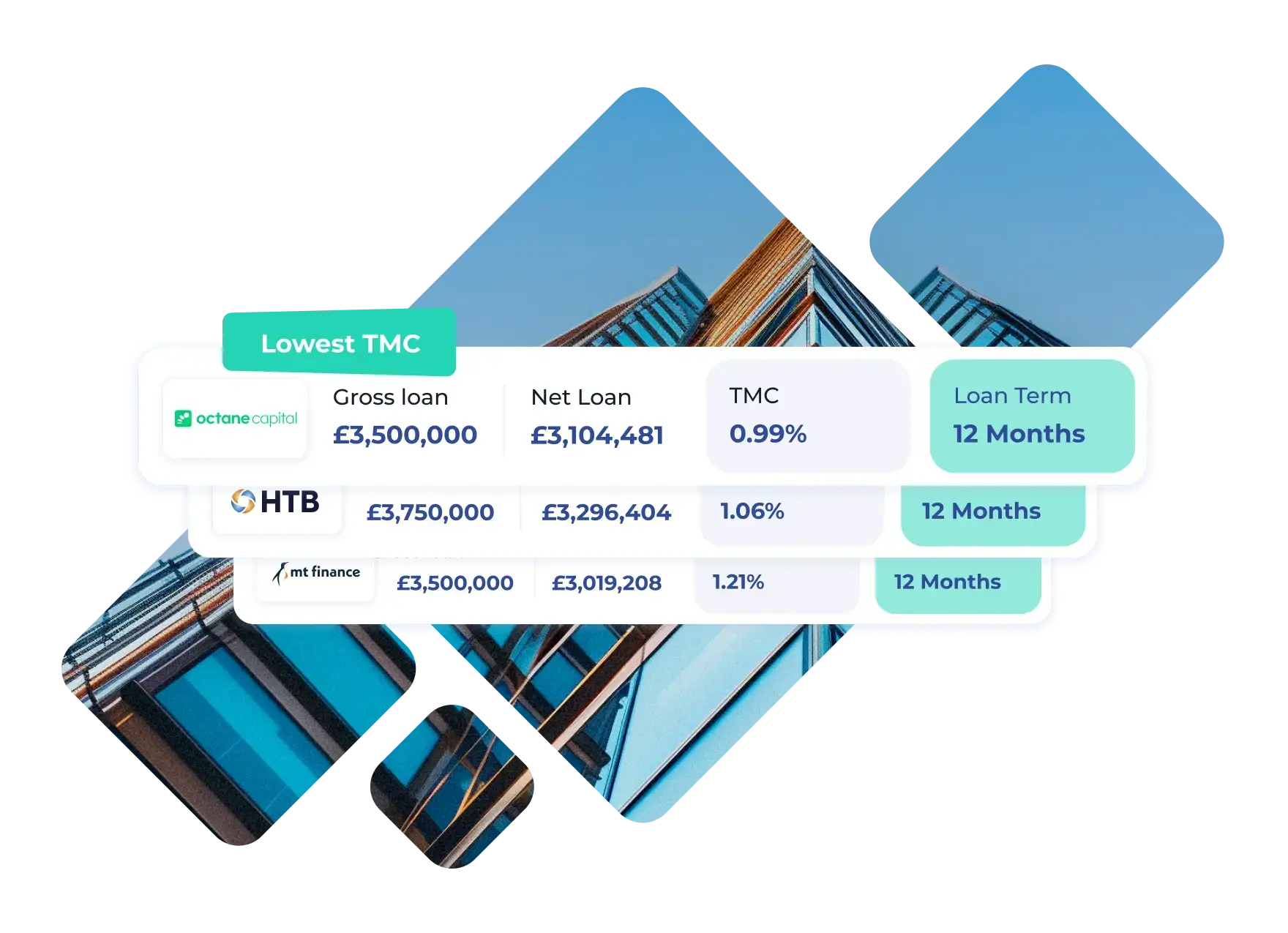
Platforms like Brickflow allow borrowers and brokers to properly research commercial mortgages and compare commercial mortgage options across multiple lenders and assess which structures best fit the property’s income profile. Access to a broader lender panel increases the likelihood of finding the most competitive terms that match the property’s income profile and risk characteristics.
For borrowers planning a transition from bridging finance to long-term debt, starting the comparison early can help shape the refinancing strategy and improve the chances of a successful outcome, enabling investors to transition with greater confidence.