If you want to avoid bad bridging lenders, start with three things: know the warning signs, carry out proper due diligence, and compare multiple lenders from the breadth of the market before committing to one.
How to Avoid Bad or Unreliable Bridging Lenders in the UK
Bridging loans are short-term, can be high-value and, except when secured against a borrower's primary residence where certain FCA regulations apply, are typically unregulated. Therefore borrower protection depends much more on the borrower's own lender vetting than on a blanket regulatory safety net.
That doesn’t make an unregulated bridging loan unsafe. It just means you need to take more responsibility for checking who you’re borrowing from, what you’re agreeing to and whether the terms stack up against the wider market.
In this guide, we cover everything you need to know to avoid bad bridging lenders in the UK.
Why bridging lender quality varies so much
Bridging lender quality varies so much because the UK bridging market is broad and fragmented. High-street and challenger banks operate alongside specialist bridging lenders, privately funded lenders, family offices and other alternative funders. Each can have very different underwriting processes, pricing, funding structures, funding certainty and a wide variance in appetite for risk.
Additionally, regulation only covers certain types of borrowing; bridging loans secured against a borrower's primary residence are FCA-regulated. Unregulated loans (investment or commercial property) are standard practice, but leave more room for inconsistent behaviour between lenders.
With no single regulator covering the whole of the market, the vetting burden sits with the borrower, their broker, or the platform they use.
Borrowers also have to be aware that if they submit the same deal to 10 different lenders, they’ll receive 10 different loan offers, which might have huge differences in leverage, fees and terms, making true comparison difficult.
Red flags of a bad or unreliable bridging lender
Most bridging lender red flags become visible before you sign, provided you know what to look for. Pay particular attention to the following:
|
Red flag
|
What it looks like / why it matters
|
|
Hidden or vague fees
|
Arrangement, exit, valuation, legal, or default fees that aren't disclosed upfront, or are bundled into vague “admin” charges instead of itemised.
|
|
Unclear or shifting terms
|
The rate or LTV quoted changes once a borrower is committed to the process, or terms aren't put in writing early on.
|
|
No FCA registration where required
|
For regulated bridging loans (secured against a primary residence), the lender or broker should appear on the FCA Register. Hesitation to confirm this or provide a Firm Reference Number (FRN) is a serious warning sign.
|
|
Unrealistic headline rates
|
“From” rates that only apply to a narrow, low-risk borrower profile, with the real cost not disclosed until later in the process.
|
|
Slow or vague early communication
|
Difficulty getting a straight answer on total cost, valuation type, or realistic timeline before an application is submitted.
|
|
Pressure to sign quickly
|
Little to no time to review offer documents, or active discouragement from comparing other lenders first.
|
|
Rigid or unclear exit requirements
|
No flexibility discussed around extensions, or no clarity on what happens if the exit is delayed.
|
|
No verifiable track record
|
Unable or unwilling to provide evidence of completed deals, references, or a clear explanation of how the loan is funded.
|
Due diligence checklist before choosing a lender
As a borrower, the most significant due diligence you can carry out is searching the whole of the market to find the best bridging loan lenders for your specific circumstances. From there, you can shortlist the best fit enders.
Before selecting a lender, work through the same basic checks every time:
- Check the FCA Register for regulated loans, and ask the lender or broker for their FRN directly (Firm Reference Number — the unique identifier the FCA assigns to every firm or individual it regulates or registers).
- Get a full, itemised cost breakdown in writing before proceeding; arrangement fee, exit fee, valuation fee, legal costs, default/exit rate and terms, broker fee and the interest charges, including how interest is charged.
- Get a Decision in Principle, not a verbal quote, and compare like-for-like across multiple lenders.
- Ask how the loan is funded (institutional capital vs private/discretionary funding), since this affects certainty of funds and speed to completion.
- Confirm the exit process — what happens if the exit is delayed, whether extensions are possible, and on what terms.
- Check reviews, case studies, and completed deal history rather than relying on marketing claims alone.
- Read the offer document in full before signing, and don't let yourself be rushed.
Find out how to get a bridging loan, and individual borrower eligibility in Who Can Get A Bridging Loan?
Why comparing the market beats going direct to one lender
Going directly to one lender gives you one view of the deal.
You may receive a competitive offer, but without a benchmark you have no straightforward way to know whether another suitable lender would offer a better rate, higher LTV, lower fees, faster completion or more appropriate exit terms.
A broker can widen that search and add valuable expertise, although coverage depends on their lender panel, experience and relationships and whether or not they are still reliant on manual loan sourcing.
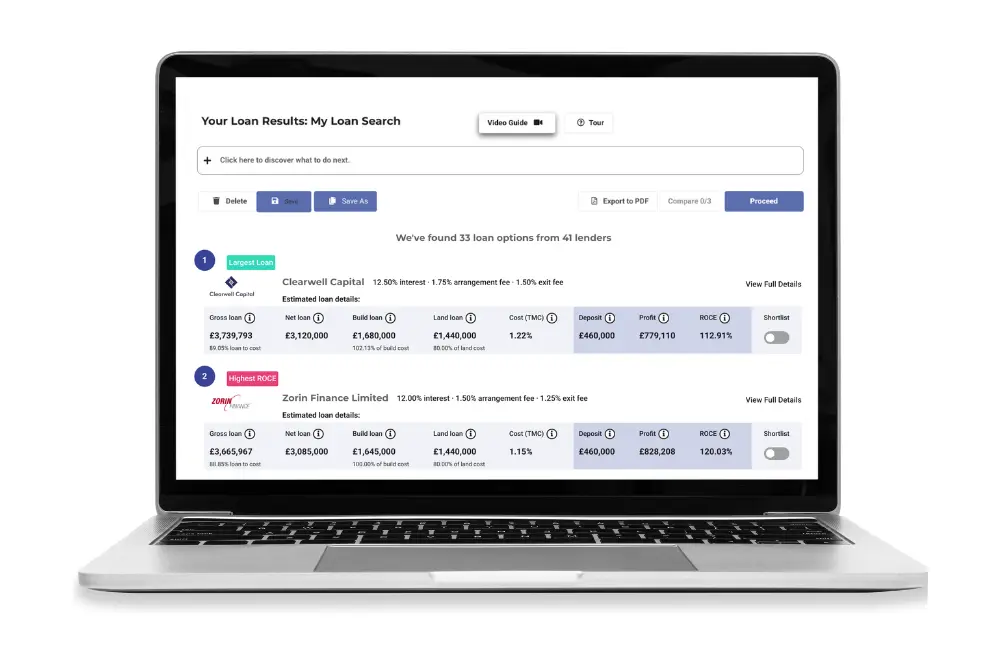
Comparing multiple suitable lenders side by side is the most reliable way to spot outliers, both unusually poor terms and offers that look too good to be true. Outlying rates, fees or terms become easier to spot when you can see what other lenders would offer for the same deal.
Even amongst good, reliable lenders there can still be huge differences in leverage and what net loan you can secure. Recent Brickflow research, The UK's Most Expensive Mistake, highlighted a £250k average net loan difference between lenders on the same deal. That's a lot of capital locked up unnecessarily, just by not comparing the market.
If you’re building your lender search from scratch, read our guide on how to shortlist bridging lenders.
How platforms like Brickflow vet and onboard lenders
A comparison platform like Brickflow removes the legwork involved in finding credible lenders, because every lender is pre-vetted before joining the platform.
Brickflow provides instant access to more than 160 UK lenders, covering the full specialist property finance market, and enables borrowers to source and filter lenders that suit their exact deal.
As part of Brickflow's onboarding process, lenders are reviewed, including their funding source, track record and lending criteria. All lender data is checked and refreshed regularly, presenting live rates, fees and criteria, rather than relying on a one-off snapshot of the market. Brickflow currently compares 200,000+ data points weekly.
Because every lender on the platform has already been through a vetting process, borrowers start from a shortlist of credible options rather than sourcing lenders cold. That helps narrow the field and makes unusual pricing or criteria easier to identify.
Brickflow reduces borrower due diligence down to a matter of seconds, but it doesn’t entirely remove your responsibility as a borrower, the checklist above should still be used as standard.
Use our bridging loan calculator to see what actual borrowing looks like for your property investment, and see how different lenders and different loan structures affect your bridging loan costs.
FAQs
How can I avoid bad or unreliable bridging lenders?
To avoid bad or unreliable bridging lenders, check for FCA registration where the loan is regulated, get a full written breakdown of costs before proceeding, and compare multiple lenders side by side rather than relying on a single quote. Platforms that vet and onboard lenders, such as Brickflow, remove much of this risk by only including reviewed lenders in the results.
What are the biggest red flags with a bridging lender?
The biggest red flags to look for with bridging lenders are hidden or vague fees, reluctance to confirm FCA registration for regulated loans, pressure to sign quickly, and an unwillingness to provide a full written cost breakdown.
How do I check if a bridging lender is FCA regulated?
To check if a bridging lender is FCA regulated, search the lender's name or Firm Reference Number (FRN) on the FCA Register at register.fca.org.uk. Only bridging loans secured against a borrower's primary residence need to be regulated — an unregulated lender operating in that space is itself a red flag.
Are all bridging loan lenders regulated?
No, not all bridging loan lenders are regulated. Only bridging loans secured against a borrower's (or their immediate family's) primary residence are regulated by the FCA. Loans secured against investment or commercial property are typically unregulated — that's standard practice, but it means borrower protection relies more on due diligence than on regulation.
Should I go direct to a lender, use a broker, or use a comparison platform?
Going direct to a lender limits you to one lender's terms with no benchmark. Brokers can add value, but results vary by broker and how wide a market search they perform. Comparison platforms that vet lenders and show like-for-like data, such as Brickflow, let borrowers see multiple credible options at once and compare loans from 100s of lenders, on equal terms.
What should I ask a bridging lender before applying?
Before applying for a bridging loan, ask the lender for a full breakdown of all fees (arrangement, exit, valuation, legal, default), how the loan is funded, what happens if the exit is delayed, and for evidence of previously completed deals.
What happens if I end up with an unreliable bridging lender?
If you end up working with an unreliable bridging lender, problems typically surface as unexpected fees, slow or poor communication, delays in the loan process, or inflexibility around the exit. If this happens, review the offer documents carefully and consider getting independent advice — which is exactly why vetting a lender before signing is far easier than resolving issues afterward.