
There's no single 'best' commercial mortgage lender in the UK. Commercial mortgage lending is split across three tiers: high-street banks, challenger banks and specialist or alternative lenders. Each will price risk differently and lend on different terms.
The best commercial mortgage rates in the UK currently start from around 5.2% and rising to 10% (Brickflow, Q3 2026), depending on the lender, loan-to-value (LTV), property type and deal profile.
Below, we cover who lends, what drives the rate you're offered and how Brickflow helps match your deal to the right part of the market.
UK commercial mortgage lenders fall into three tiers
Commercial mortgage lenders in the UK broadly sit in one of three groups, and each suits a different kind of borrower and deal.
| Lender type | Examples | Indicative rates | Best suited to |
|---|---|---|---|
| High-street banks | Barclays, HSBC, NatWest, Lloyds | From c. 5.2% | Strong-covenant, lower LTVs |
| Challenger banks | Allica, Shawbrook, Aldermore | c. 6–8% | Mixed-use, higher-LTV deals |
| Specialist/alternative lenders | Together, InterBay | c. 7–10%+ | Complex assets, adverse credit |
High-street banks: from c. 5.2%
Generally, the big banks offer the lowest headline rates in commercial mortgage lending. That pricing is reserved for the strongest borrowers: established businesses or investors with solid accounts, good-quality tenants and low LTVs. Banks also tend to be the slowest to complete, with more layers of credit approval and underwriting processes than other lenders. For long-term investment holdings with secure, long-lease income, a high-street bank is often the cheapest option over the life of the loan, provided the deal fits their criteria.
Challenger banks: c. 6–8%
Challenger banks sit in the middle of the market. They're more flexible on mixed-use property and higher-LTV deals, and they usually turn applications around faster than the high-street banks. For investor-owned commercial property, challenger banks are often a strong fit. Many are comfortable lending to portfolio landlords, multi-let assets and limited company structures, while still pricing competitively on straightforward deals with good credit and reliable income.
Specialist and alternative lenders: c. 7–10%+
Specialist lenders take on the deals banks turn down: complex or non-standard assets, short leases, unusual ownership structures and borrowers with adverse credit. They underwrite case by case and can move quickly, but that flexibility is priced in. If you want commercial property finance with flexible terms, specialist lenders and challenger banks are both worth considering.
See our full list of commercial mortgage lenders for more on who's active in each tier.
LTV, property use and rate type decide what you pay
Which lender you choose sets the range, but the deal itself decides where you land within that range. Three of the biggest factors that affect the rate you're offered include:
Loan-to-value
LTV has the most direct effect on pricing. Deals below 60% LTV typically attract the most competitive rates, while borrowing above 75% narrows availability considerably, with fewer lenders active and rates rising accordingly.
Owner-occupied vs investment
Owner-occupied commercial property, where your business trades from the premises, typically attracts lower rates than investment property. On investment deals, pricing reflects the tenant's covenant strength and the length of the lease. A strong tenant on a long lease will secure better terms than a short lease or a property with vacancy risk. Our guide to commercial mortgage requirements covers what lenders assess in more detail.
Fixed vs variable
Both are widely available. Variable rates are usually quoted as a margin of roughly 2–5.5% over the Bank of England base rate, so your payments move up or down according to base rate changes. Fixed rates lock in your payment for a set period, which suits long-term holds where predictable costs help with planning.
Compare loans from 160+ lenders & secure a DIP today.
Brickflow matches your deal to the right lenders
Most borrowers start with their own bank, and many stop there. That can mean paying more than necessary, or being turned down for a deal another lender would happily take on.
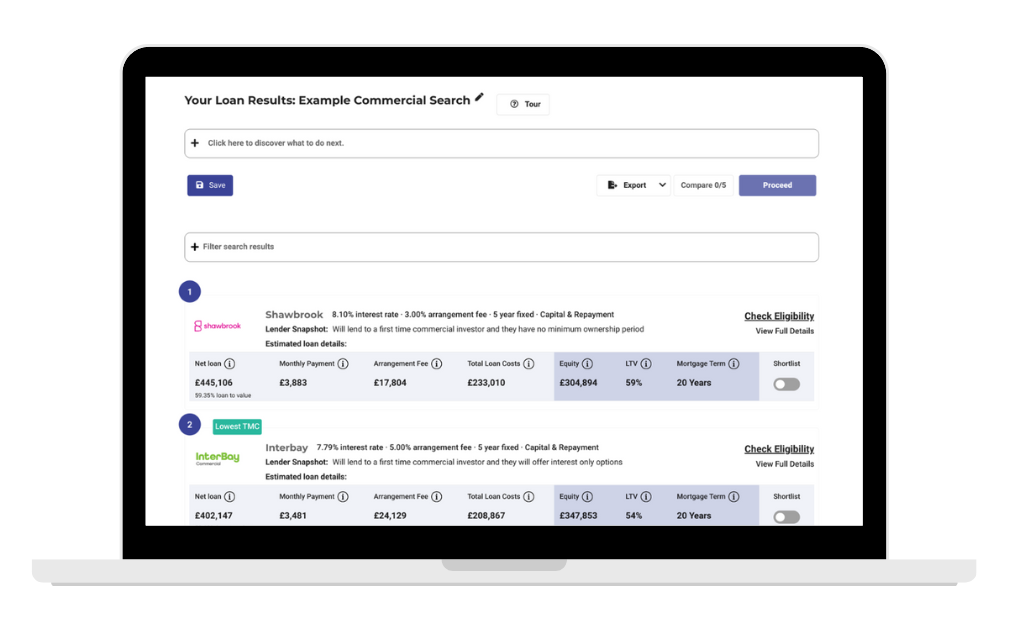
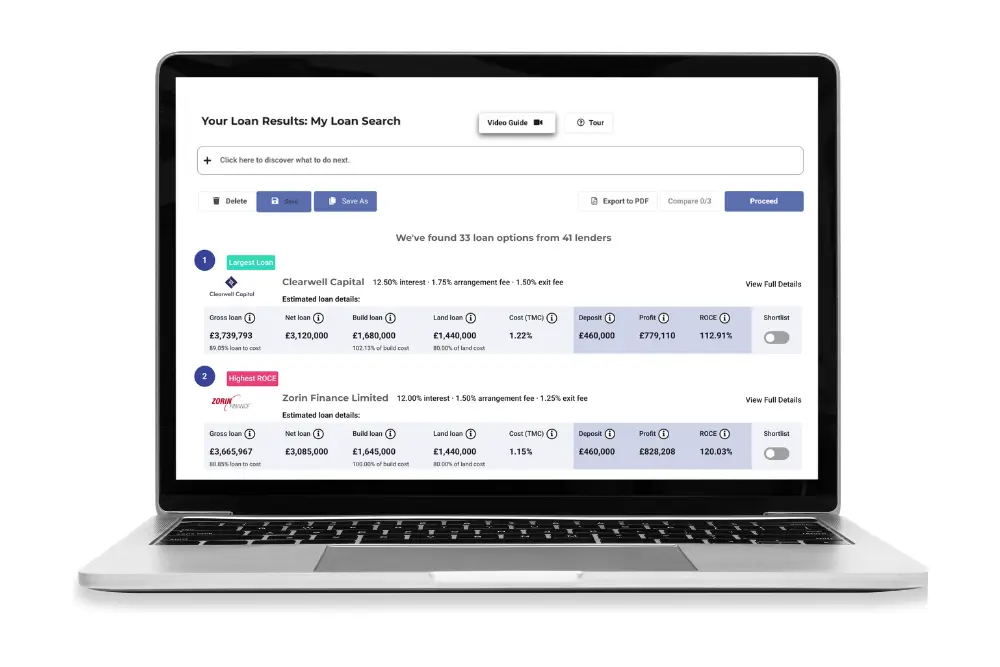
Brickflow makes it easier to compare commercial mortgage options across the market. We hold structured, up-to-date criteria and pricing across our commercial mortgage lender panel, spanning high-street banks, challenger banks and specialist lenders. That means you can see which tier your deal belongs in and which lenders realistically fit it, rather than guessing or defaulting to your existing bank.
If you're not sure whether you'll qualify at all, our guide on whether you can get a mortgage on a commercial property is a good place to start.
Check your rate with the commercial mortgage calculator
The quickest next step is Brickflow's commercial mortgage calculator. Enter your deal details to see indicative rates and realistic lender matches across the market. From there, you can compare terms side by side and approach the lenders most likely to offer the right deal.
FAQs
Who offers the best commercial mortgage rates in the UK?
High-street banks generally offer the lowest headline commercial mortgage rates, from around 5.2%, but only to the strongest-covenant borrowers at lower LTVs. Challenger and specialist lenders price higher but lend more flexibly.
What's the difference between high-street banks and specialist lenders for commercial mortgages?
Banks are the cheapest option but also the slowest and strictest. Specialist and alternative lenders are faster and more flexible on complex deals, and their rates are higher to reflect that.
How much do commercial mortgage rates vary by loan-to-value?
Significantly. Deals below 60% LTV get the most competitive pricing, while fewer lenders are active above 75% LTV and rates rise accordingly.
Are commercial mortgage rates fixed or variable?
Both are available. Variable rates are typically priced as a margin of around 2–5.5% over the Bank of England base rate.