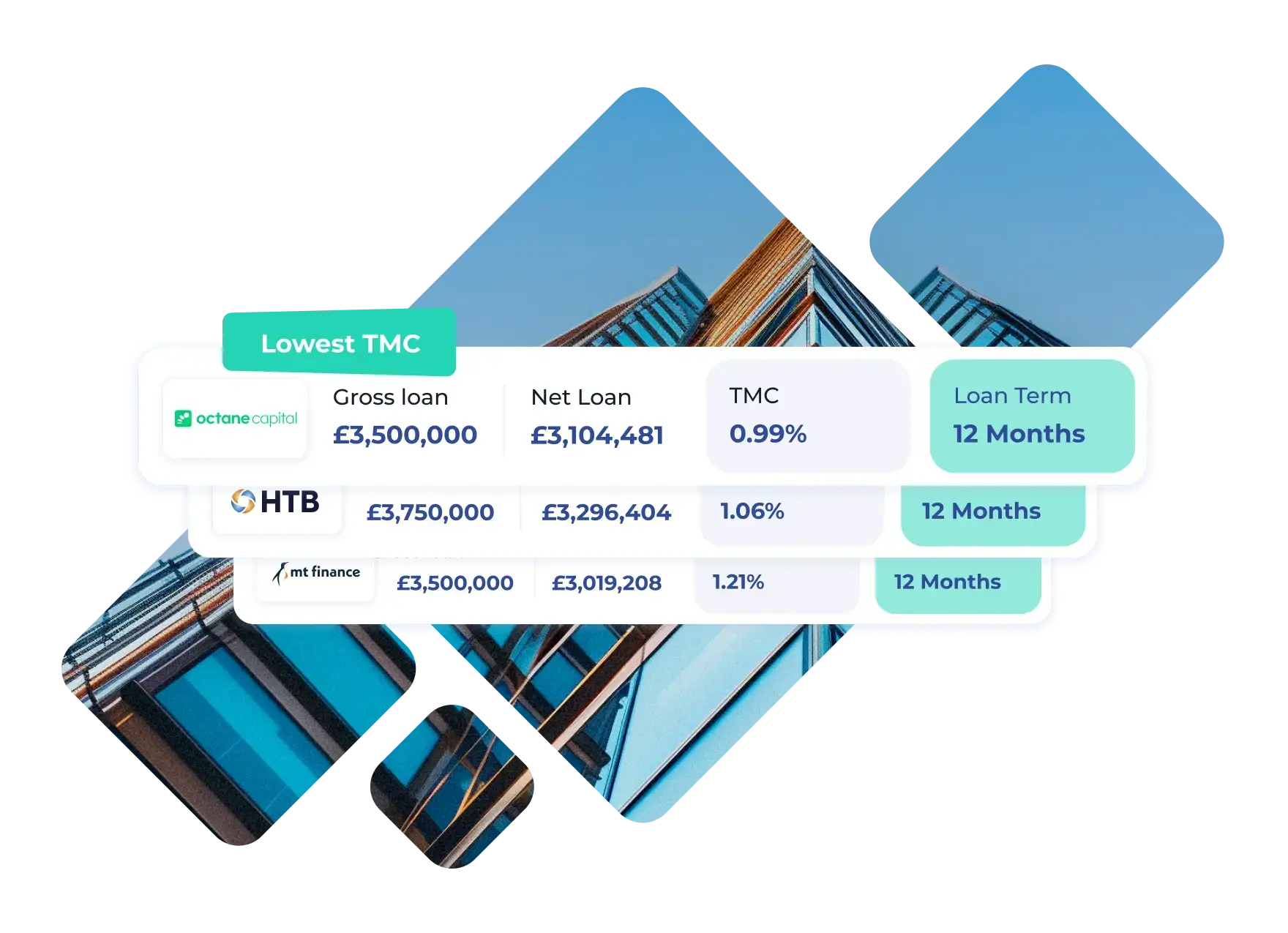
You can finance your first commercial property through a variety of methods, including commercial mortgages, bridging loans, development finance, and even peer-to-peer lending. With Brickflow, comparing lenders and securing funding is faster, easier and more transparent than going through a traditional broker.
Commercial property finance is a broad term that covers the funding used to purchase or develop buildings used for business purposes, from office blocks to warehouses to mixed-use spaces. The right finance can be the difference between a stalled idea and a thriving investment.
In today’s market, opportunities in commercial property are on the rise, fuelled by a return to office-based work and increased bank lending to small businesses. Latest figures show that UK commercial real estate investment is currently worth £10.2bn (Q2 2026, CBRE). But securing the right finance for your goals still takes strategy.
In this guide, we’ll cover:
- The main types of finance available
- Pros and cons of each
- How to prepare for an application
- Real-world options if you have limited cash
- How to compare lenders with Brickflow
What are the main ways to finance a commercial property in the UK?
The main ways to finance a commercial property in the UK include commercial mortgages, bridging loans, development finance, and private or peer-to-peer lending.
With Brickflow, you can compare all of these in minutes to find the right fit for your project. Try our bridging loan calculator, commercial mortgage calculator or development finance calculator today – it's free to use, with no obligation and no credit checks. Just live borrowing options from over 160 lenders.
- Commercial mortgages
- Long-term finance (5+ years)
- Lower interest rates
- Suitable for income-generating properties
Read more in What is a Commercial Mortgage?
- Bridging loans
- Development finance
- Structured in drawdowns
- Covers construction or heavy refurbishment
- Based on Gross Development Value (GDV)
- Peer-to-peer or private lending
- Flexible terms
- Fewer hoops to jump through
- Higher rates, variable due diligence
Each has unique advantages depending on your project, time frame, and available deposit.
Read more about different Investment Property Loans to help grow your portfolio.
Can you get a commercial mortgage as a first-time investor?
The short answer is yes; first-time investors can secure a commercial mortgage. While it may be more challenging compared to seasoned landlords or developers, it’s certainly achievable with the right preparation and support.
Lenders will want to see that, even without a direct track record in commercial property, you have the means and strategy to manage the investment successfully. This means demonstrating financial stability, presenting a well-researched business plan, and surrounding yourself with experienced advisors or partners where possible.
When assessing an application, lenders typically consider:
- Your experience in property: Even residential landlord experience can count towards your credibility.
- The strength of your business plan: Projections, local demand, and risk mitigation strategies all matter.
Expected rental income: To prove affordability and cover debt service.
Deposit size and credit profile: Most commercial mortgages require a deposit of 25–40%, and a strong credit history is a major advantage.
Did you know? In 2024, UK commercial real estate lending rose to £36.3 billion, up 11% year-on-year (Bayes Business School). This demonstrates strong lender appetite, even in a shifting market; good news for new entrants who can present a solid case.
While first-time investors may not always qualify for the very lowest rates at the outset, there are plenty of competitive products available. Working with a platform like Brickflow gives you instant access to 160+ lenders, helping you compare terms, forecast affordability, and secure the right deal to kickstart your commercial investment journey.
Read more about researching commercial mortgages.
How much deposit do you need for a commercial property?
Typically, you’ll need a deposit of 20% to 40% for a commercial mortgage. The exact percentage depends on the lender, your experience, the type of property, and the level of risk.
Factors that affect deposit size:
- Property type: Specialist assets may require a higher deposit
- Experience: First-time investors are seen as higher risk
- Loan structure: Some lenders allow you to use other property as security
Tips for reducing your deposit:
- Offer additional security
- Use a joint venture partner
- Apply for development finance, which covers more of the build costs
What are the pros and cons of using bridging finance for commercial property?
Bridging finance is a short-term loan used to “bridge” a gap in funding, and is ideal for time-sensitive commercial property deals. At Brickflow, we see bridging loans used regularly for auction purchases, land acquisitions, mixed-use property and chain breaks.
How it works:
- Terms up to 24 months
- Interest is often rolled up
- Exit plan (sale or refinance) is key
Pros:
Cons:
- Higher interest rates (0.5% to 1.5% per month)
- Short repayment period
- Fees and exit charges apply
Learn more about bridging finance and how much a bridging loan can cost.
How does development finance work for commercial projects?
Development finance is used to fund new builds or heavy refurbishments of commercial properties. Lenders typically provide funds in staged drawdowns, based on build milestones.
Key features:
- Loans based on GDV or total project cost
- Interest is usually rolled up
- Exit via sale or long-term refinance
Pros:
- Funds both land purchase and building costs
- Only pay interest on drawn funds
- Tailored for developers and value-add investors
Cons:
- Requires robust planning, QS, and an exit strategy
- Heavier due diligence
- May require experience or team track record